Tuesday, August 26, 2025

These colors paint the history of USPS
Pantone has created a palette highlighting some of the organization’s milestones
USPS and the Pantone Color Institute have worked together to showcase seven colors to celebrate the Postal Service’s 250th anniversary.
The shades chosen are:
• Parchment White, which recalls the 18th-century paper used for correspondence and honors the establishment of a postal system on July 26, 1775.
• Pony Express, a shade of brown that honors the Pony Express, created in 1860.
• Airmail Red, which pays tribute to the Curtiss JN-4, the biplane used to carry the first airmail letters in May 1918, and the “Inverted Jenny” stamp.
• Mr. ZIP Orange, which invokes the postal cartoon mascot introduced in 1963 to help teach customers about the five-digit ZIP Code.
• Carrier Red, which remembers a postal uniform patch and emblem introduced in 1965.
• Gold Seal, which honors the Postal Reorganization Act of 1970, and the then-new logo of the newly created USPS.
• USPS Blue, which draws from the “sonic eagle” logo introduced in 1993.
The new colors will not be available for stamps, paint or apparel, and they won’t replace the red and blue tones that USPS uses for its corporate colors.
Instead, the new colors were created for marketing purposes only to help commemorate the Postal Service’s 250th anniversary and will not be used for any other purpose.
“We were looking for a unique way to tell our 250-year history and hit another touchpoint in our storytelling. It was a natural fit to work closely with the Pantone Color Institute to mark moments that shaped USPS through color. This way of storytelling is an unexpected and authentic way to get our brand story out to a wider audience,” said Amity Kirby, the Postal Service’s licensing and creative manager.
The Pantone Color Institute is a consulting service that forecasts global color trends and advises companies on color in brand identity and product development.
The Pantone website has more information about the collaboration with USPS and each new color.

Malone to serve as applied engineering VP
She’ll oversee efforts to transform processing and sortation equipment
The Postal Service has named Linda Malone as applied engineering vice president, a role she has held on an acting basis since June.
Malone succeeds Gary Reblin, who was recently named chief technology officer.
In her new role, Malone oversees the strategy, design, implementation and activation of next-generation technologies and sortation equipment to transform mail processing and retail and delivery networks.
She also oversees the development and enhancement of the Postal Service’s products and services to increase revenue and improve the customer experience.
Most recently, Malone served as engineering systems vice president, where she was responsible for the strategic planning of technology initiatives including the acquisition, development, deployment, testing and integration of new technology and software to support mail processing, material handling and delivery operations.
She also previously served as the network operations vice president and vice president for the former Capital Metro Area.
Malone joined the Postal Service in 1985 as a letter carrier in Wilmington, DE.

On the Job
He provides a guiding hand
This deputy chief helps the Postal Inspection Service implement its mission
My name is Lou DiRienzo and I’m a deputy chief inspector at Postal Inspection Service headquarters in Washington, DC. I’ve been with the organization for 22 years.
After serving in the Army and graduating from Penn State, I decided to work as a police officer and then go to law school.
I was a police officer for seven years in Lancaster, PA. I really enjoyed police work.
I set my sights on becoming a postal inspector because of their reputation in the law enforcement community and their mission. My uncle, a letter carrier, told me being an inspector would be a great job.
After I was appointed as an inspector, I was assigned to the Pittsburgh Division. I later worked assignments in the Philadelphia Division and at the Justice Department, where I focused on complex mail fraud cases.
I worked on consumer fraud cases involving fraudsters who preyed on vulnerable victims. I found it very fulfilling to bring those criminals to justice.
I eventually earned my law degree, which opened the door for me to be appointed as an inspector-attorney and eventually chief counsel.
Now as a deputy chief inspector, I report to Chief Postal Inspector Gary Barksdale. I have four groups that report to me: security and crime prevention; our forensic lab; our training academy; and communications, governance and strategy.
My main job is making sure each group’s work is in line with the goals of the Postal Service, the Inspection Service and the chief.
The Inspection Service has an incredibly broad mission compared to other federal law enforcement agencies. We enforce mail crimes ranging from illegal narcotics trafficking to identity theft to money laundering, and so much more.
We also have a large corporate security element. We protect the Postal Service brand as well as its 35,000 facilities and 640,000 employees.
When I think of my career here, I remember taking on the role of inspector because I wanted to be a federal agent. But I had no idea of the scope of this organization.
It’s unique and challenging. And it keeps me engaged.
“On the Job,” a column on individual employees and their contributions to the Postal Service, appears regularly in Link.
Take care before you share
There are rules for handling records with personally identifiable information
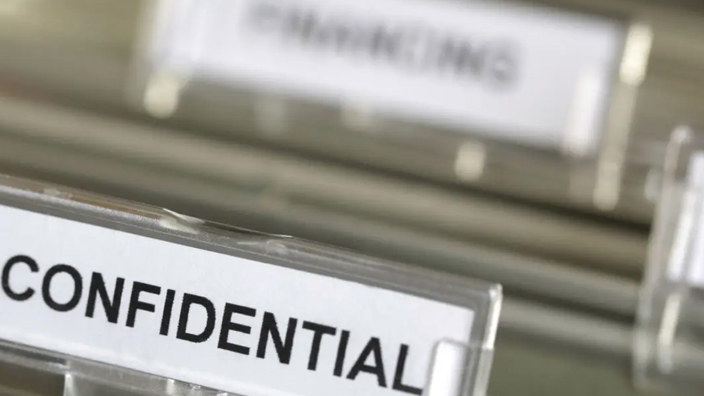
The Postal Service is reminding employees to follow the Privacy Act of 1974 and not disclose personally identifiable information to outside individuals or entities, unless authorized to do so.
Disclosing protected records to other USPS employees and contractors is also prohibited unless the recipients need to know the information to perform their jobs.
In some instances, such as responding to Freedom of Information Act requests, disclosing records or other types of USPS information is authorized or required, but Postal Service employees and contractors must remove attachments, links, metadata and any other hidden information in PDFs prior to release.
Offices that need to create new systems of records containing personally identifiable information — such as new databases or programs — should email the USPS Privacy and Records Management Office.
Handbook AS-353, Guide to Privacy, the Freedom of Information Act, and Records Management and the USPS privacy policy contain more information.
Employees with questions should email the USPS Ethics Office.
Mail
Toddlers, start your engines
Our article on a toy mail truck gives grandparents ideas
Email us your feedback. Your comments could be included in our “Mail” column.
View past printouts
Printout details
What's included
-
These colors paint the history of USPS
Pantone has created a palette highlighting some of the organization’s milestones
-
Malone to serve as applied engineering VP
She’ll oversee efforts to transform processing and sortation equipment
-
On the Job
He provides a guiding hand
This deputy chief helps the Postal Inspection Service implement its mission
-
Take care before you share
There are rules for handling records with personally identifiable information
-
Mail
Featured reader quote
“I just read ‘This toy truck delivers for toddlers.’ How cute! I know just the little one I will be purchasing it for.”
— Dawn Brames , Pleasant Lake, IN