Thursday, April 23, 2026
Primers
Here’s how U.S. envoys around the world get their mail
The Diplomatic Post Office delivers to embassies and consulates in far-flung places
A partnership between the Postal Service and the State Department ensures that U.S. Mail gets to American diplomats and their families — no matter how remote the posting.
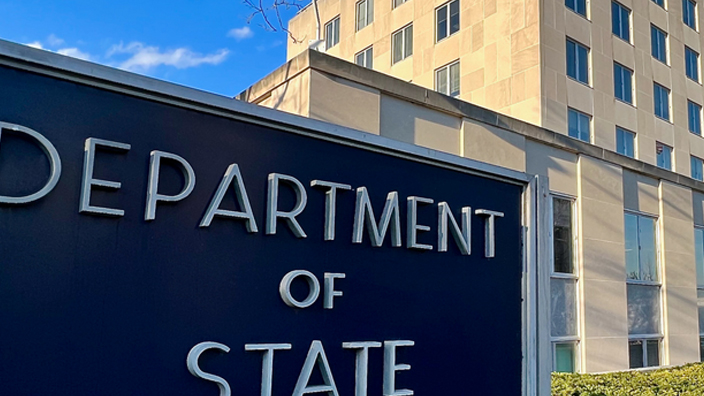
The Diplomatic Post Office, or DPO, is an arm of the State Department that works with USPS to deliver mail — “a make-or-break staple for morale,” according to Charles Weidler, chief of the department’s Diplomatic Post Office Division.
The DPO extends the reach of the American postal system to roughly 200 U.S. embassies, consulates and missions around the world, Weidler said. The program allows diplomatic employees to send and receive mail at domestic postage rates, regardless of their duty location.
Many serve in remote, economically challenged areas and in war-torn regions such as the Middle East and Ukraine. DPOs “provide a lifeline for employees stationed in regions where local mail systems are unreliable, insecure or nonexistent,” he said.
“DPO” was officially recognized as a valid overseas address on Jan. 18, 2009. In 2011, a tripartite agreement between the Postal Service and the State and Defense departments took the program out of the pilot stage and made it an established entity.
The Postal Service hosts a DPO presence at three USPS international service centers in Chicago, Miami and New York, and at the Jersey City Processing and Distribution Center.
Its motto is “Beyond borders, beyond barriers — DPO delivers.”
Weidler said that his staff of 13 has more than 400 years of postal experience in military, USPS and other federal agencies.
Last year, the program moved more than 11 million pounds of mail to more than 130 countries.
“Essentially, the DPO-USPS partnership provides a touch of home for members serving abroad,” Weidler said. “Its success is anchored in strong interagency coordination … and a shared commitment to ensuring that every diplomat, no matter how remote their assignment is, remains connected to home.”
“Primers,” a Postal Service explanatory column, appears occasionally in Link.
USPS employees who stole mail are now doing time
A Chicago gang lured carriers and handlers with cash and gifts
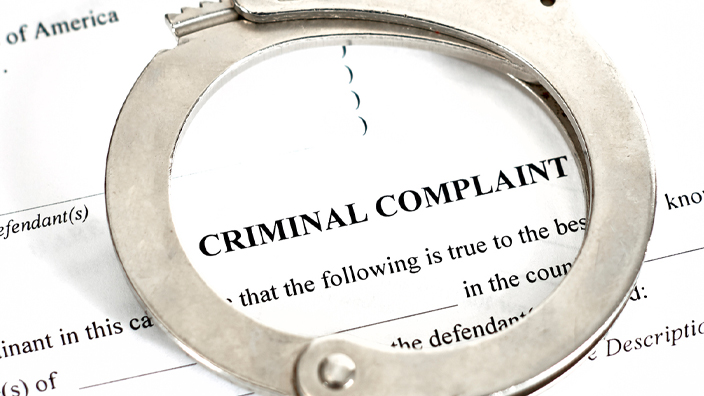
A Chicago area mail theft conspiracy involving 35 Postal Service employees has ended in prison sentences and $6 million in restitution.
Hundreds of people and businesses weren’t receiving their expected business checks, U.S. Treasury checks, credit cards, debit cards, military correspondence, gift cards and cash in the mail.
Their checks were being cashed, their credit cards were being used fraudulently, and their identities were being hijacked.
Members of a street gang had begun targeting young, female Postal Service employees in 2017.
One employee-turned-conspirator was approached while grocery shopping in her uniform. A young man asked her if she wanted to make some money on the side by stealing specific types of envelopes from the mail and turning them over to him or his associates.
At her Post Office, she rifled through the mail to grab what was requested and then snuck it out in her uniform or belongings. She handed off the stolen mail while on her delivery route or after work.
At first, she was paid large sums of money and given expensive gifts. But the gifts soon stopped and the money dwindled.
The criminal then threatened her life if she stopped stealing, making it harder for her to break free and alert the authorities.
She wasn’t the only employee targeted online and in person with promises of quick, easy cash. Once recruited, the gang would push them to lure other employees — mostly young women with no criminal records.
Video surveillance captured other mail carriers and handlers pocketing handfuls of mail at Post Offices and processing plants and in their delivery vehicles. Some mail handlers were seen walking out of plants with garbage bags filled with stolen mail.
Gang members would pay others to cash the stolen checks for them.
USPS customers whose checks were stolen had their identities compromised because the criminals used their personally identifiable information to open credit cards in their names. The colluding employees aided this by intercepting mail sent from financial institutions intended to verify the identity of the supposed requestors.
Agents with the USPS Office of Inspector General and postal inspectors partnered with Homeland Security Investigations, the Secret Service, the Illinois Statewide Terrorism and Intelligence Center, and the Naperville, IL, Police Department to build their cases. They also enlisted the help of banks and other financial institutions.
They eventually identified 13 external suspects and 35 USPS employees who had exploited more than 200 ZIP Codes and more than 10,300 victims.
The employees resigned or were terminated. The federal prosecution resulted in the conviction and sentencing of 27 defendants to a combined 36 years in prison. They were also ordered to pay their victims a combined $6 million.
“When trust in the Postal Service was stolen, the OIG and its law enforcement partners took it back,” said Tammy Hull, the Postal Service’s inspector general.
The OIG recently highlighted this case on its website.
If you suspect or know of mail theft involving USPS employees or contractors, report it to the OIG.
Mail
A slow roll down memory lane
Lowrider story reminded reader of his days in San Diego
Email us your feedback. Your comments could be included in our “Mail” column.
Southern Area, South Carolina District on top in scanning
A snapshot of Postal Service scanning data shows the national rating was 97.3 percent during the week ending April 17, down 0.29 percent from one week earlier.
The data was collected April 22.
Southern led the four areas with a rating of 97.42 percent, while WestPac ranked last with a 97.17 percent rating.
Among the 50 districts, South Carolina, part of Southern Area, ranked first with a 98.5 percent rating, while Virginia, part of Atlantic Area, ranked last with a 94.63 percent rating.
Scanning data allows customers to track their mail and packages, which helps USPS deliver excellent service, boost loyalty and drive revenue.
To see the latest data, go to the Informed Visibility website and select “Customer Experience,” followed by “DES 2 Scan Performance.” Postal Service employees must request Informed Visibility access through eAccess.
View past printouts
Printout details
What's included
-
Primers
Here’s how U.S. envoys around the world get their mail
-
USPS employees who stole mail are now doing time
-
Mail
Featured reader quote
“As a resident of San Diego from the late ’70s to mid-’90s, I loved ‘These rides are low and slow, clean and mean’! I’ve always liked older cars, and I would say that...”
— James Smith, New Hope, AL
-
Brief
Southern Area, South Carolina District on top in scanning