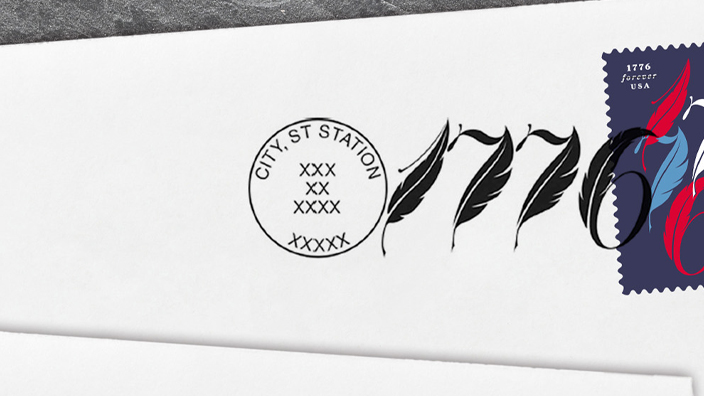
If you’ve ever wondered what locale wound up with the exceptionally patriotic ZIP Code that tips a postal hat to the year of America’s Declaration of Independence, look no further than the heart of Revolutionary New England.
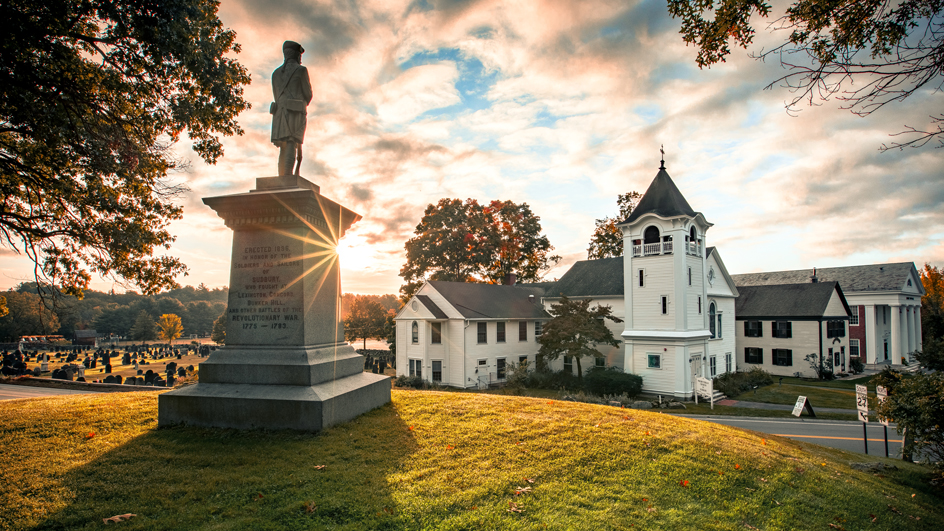
There in the suburbs west of Boston, you’ll find Sudbury, MA — a town with Colonial roots dating back to the 17th century. Back then, in the early years of the Massachusetts Bay Colony, Sudbury found its footing with just around 100 intrepid settlers, who were outnumbered by cattle 3 to 1.
Today, the affluent community of around 20,000 residents (cattle population woefully unknown) draws high-skilled workers in fields such as healthcare, science and technology who appreciate its relative tranquility combined with convenient proximity to the big city.
Tourists come, too, to step back into a time when the United States of America was still a vision and not yet a reality.
At Meadow Walk, the modern town center developed in the 2010s, you can’t miss the five large metal cubes shaped into the digits 01776 by sculptor Dale Rogers.
“Our ZIP Code really adds to Sudbury’s patriotic spirit,” said Francesco Buccella, director of the local historical society.
While the ZIP Code may be a matter of coincidence, there is undeniable Revolutionary War-era significance in the town’s heritage. After all, sons of Sudbury were among the casualties from the militia and minutemen companies who fought the British at the 1775 battles of Lexington and Concord. “The shot heard ’round the world” at Lexington sparked the armed struggle for independence won in 1783 by the young United States.
And with one of New England’s oldest town-meeting forms of governance, Sudbury has long exemplified principles of free speech and debate that shaped the American democracy Colonists took up arms to create.
Sudbury was on the vanguard of hospitality as well. The Wayside Inn, one of the oldest continuously operating inns in the country, opened as Howe’s Tavern in 1716. Its 100-acre grounds include the Old Grist Mill, famous for inspiring the Pepperidge Farm logo, and the Redstone Schoolhouse, where Mary Sawyer brought her pet lamb in 1815, thus inspiring the poem “Mary Had a Little Lamb.” It’s even rumored that George Washington once stopped by the inn on his way to Cambridge and possibly stayed the night.
It was also where Henry Wadsworth Longfellow set his 1863 collection of narrative poems, “Tales of a Wayside Inn.” Among the stories told by the travelers gathered there? “Paul Revere’s Ride,” as in “Listen, my children, and you shall hear of the midnight ride of Paul Revere” — immortalizing his warning of British troops approaching Lexington and Concord.
The inn benefited from the investment of auto magnate Henry Ford, its last private owner, who bought it in 1923 and established the foundation that operates it today. Its longevity also stems from its location on the old Boston Post Road, the fabled route for mail and travelers that helped the area flourish.
The legacy endures at the local Post Office on the current Boston Post Road. Postmaster Monirul Chowdhury extols a recent renovation there that’s made it feel like “a brand-new building” beloved by customers.
“They want to see us thrive far into the future,” he said.
This article will appear in the July 2026 issue of The Eagle magazine.