Tuesday, January 6, 2026

You can set aside more money in 2026
There are now higher maximums for FSAs, HSAs, transit and parking
Postal Service employees can set aside more money for flexible spending accounts, health savings accounts and commuter benefits in 2026.
Flexible spending accounts, or FSAs, allow employees to set aside money on a pretax basis to pay for health care and dependent care expenses. The 2026 maximum for a health care FSA is $3,400. For a dependent care FSA, the maximum is $7,500 for single filers and those who are married and file jointly, and $3,750 for those who are married and file separately.
A health spending account, or HSA, is a savings account for employees covered by a high-deductible health plan to pay for qualified medical expenses. The maximum contribution limits for 2026 are $4,400 for self-only coverage and $8,750 for family coverage.
The transit and parking maximums will increase to $340 each for 2026. Employees can enroll in the USPS Commuter Benefits Program at any time. The cutoff for making changes or allocating funds is the 27th of the month two months before an allocation will begin. For example, Jan. 27 is the cutoff for allocating funds for the March benefit month.
The MyHR website has more information on these benefits. Employees with questions should email the USPS Benefits and Wellness team.
On the Job
He feels ‘very honored’ to work for USPS
This letter carrier enjoys interacting with his customers each day
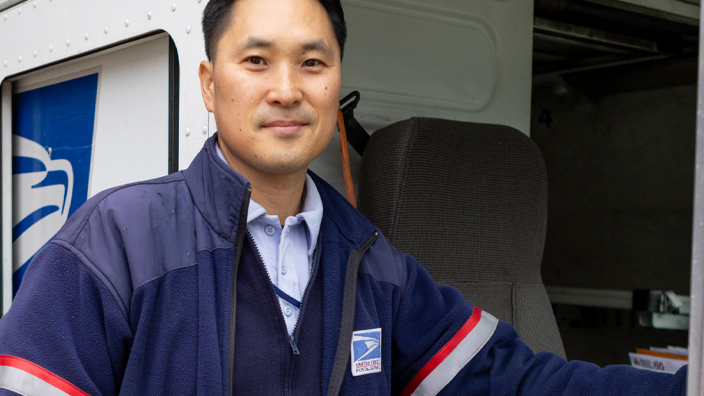
My name is Jon Kwon and I’m a letter carrier in Syosset, a small community on Long Island, NY.
I have worked for the Postal Service for 21 years — always in Syosset. This was my first choice for a career, and I feel very honored to work here.
Luckily, I’ve had only two routes during my career. As a result, I have gotten to know all the children growing up on my route. Syosset has fun and nice people.
I like to interact with my customers and hear their life stories. I love being a letter carrier and being out in the community.
All the people in Syosset are great. In the summer, they offer me water and sometimes fruit or other food. In the winter, they come with hot tea and sometimes even hand warmers. That keeps me warm for the whole day. We don’t get as much snow as we did 10 years ago, but this year I’m expecting more. I don’t know why, but I can feel it.
Currently, I have around 280 stops each day — a mix of driving and walking. I used to walk more than 10 miles a day, but now I walk only a few miles a day.
I moved to Long Island from Queens about 10 years ago and currently live in Westbury.
Sometimes people will ask me for advice about the neighborhood. I tell them how great it is.
“On the Job,” a column on individual employees and their contributions to the Postal Service, appears regularly in Link.
Is someone you know seeking to do business with USPS?
Employees must follow the rules to avoid a loss of impartiality
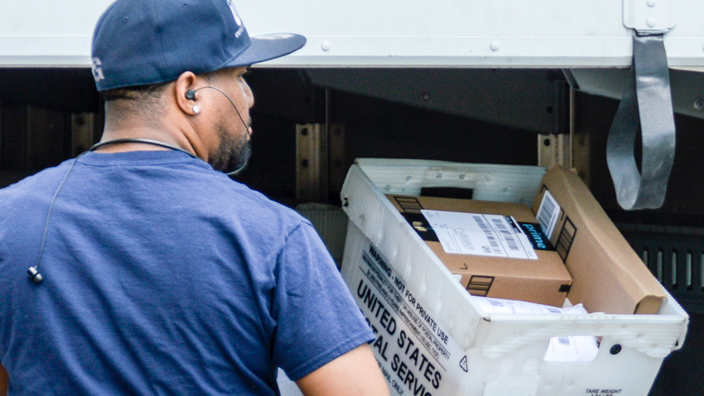
The Postal Service is reminding employees to avoid working on matters that would impair their ability to remain impartial due to an outside relationship.
Employees should not work on any contract or initiative if they have a “covered relationship” with the owner or a representative of a company doing business or seeking to do business with USPS.
Covered relationships that could spark a conflict of interest include:
• A person with whom the employee has or seeks a business relationship;
• A household member;
• A relative with whom the employee has a close personal relationship;
• The current or future employer of the employee’s spouse, parent or child, including adult children;
• The employee’s former private sector employer within the last year; or
• An organization other than a political party in which the employee is a participant.
Employees who have a covered relationship with the owner or representative of an entity doing business with the Postal Service or seeking to do business with the Postal Service should notify their supervisor and seek guidance and authorization from the USPS Ethics Office in advance.
The Ethics Blue page covers this topic in more detail. For more information, employees with questions can email the Postal Service’s ethics helpline or call 202-268-6346.
That email request might just be an attack waiting to happen
Employees must be vigilant to avoid harmful phishing scams
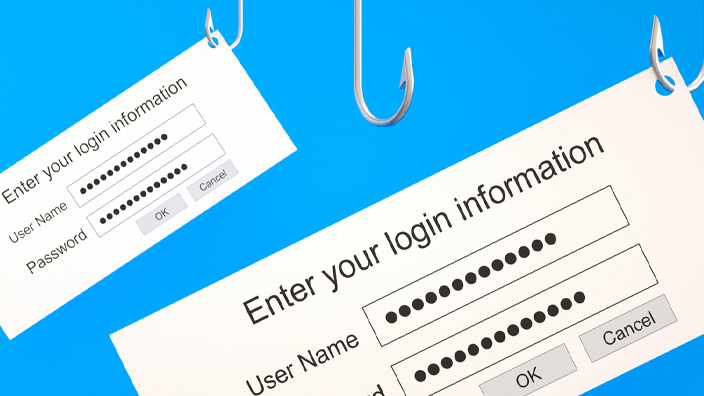
The Postal Service is reminding employees and contractors to guard against phishing emails to protect the organization’s network from cyberattacks.
Phishing occurs when cybercriminals send legitimate-looking emails to try to trick recipients into giving over personally identifiable information, systems credentials and other sensitive data.
Phishing scams can harm the Postal Service’s operations, finances and reputation.
Employees and contractors should follow these tips:
• Slow down and evaluate messages before acting. Be wary of urgent requests.
• If an email is from a non-USPS address — typically with “[EXTERNAL]” in the subject line — proceed with extra caution and verify the sender.
• Before clicking on a link, hover the cursor over the link to ensure its description matches its destination.
• Look for spelling and grammar mistakes, which can indicate a phishing attempt.
• Don’t open any attachments in a suspicious email.
Employees and contractors should report suspected phishing emails by clicking on the “Report to CyberSafe” button in the Outlook toolbar. If the button is missing, it can be installed.
The CyberSafe at USPS Blue and LiteBlue pages have more information on phishing.
Mail
Seals of approval
Readers praise our story on the history of Christmas stamps
Email us your feedback. Your comments could be included in our “Mail” column.
January 13, 2026
Datebook
‘Cooking for Better Health’
Postal Service employees may participate in an upcoming webinar on healthier types of fats and using different cooking oils.
The session, “Cooking for Better Health,” will be held Tuesday, Jan. 13, from noon to 1 p.m. Eastern.
Representatives from United Healthcare, a provider of health plans for federal employees, will lead the discussion.
Participants must register before the event on the webinar website.
Participation is voluntary. Nonexempt employees must participate off the clock or during authorized breaks.
Employees with questions can email the USPS Benefits and Wellness team.
USPS issues report to Congress for 2025
The Postal Service has released its Annual Report to Congress for fiscal year 2025.
Highlights of the report, which covers Oct. 1, 2024-Sept. 30, 2025, include:
• Total mail and package volume decreased 3.3 percent from fiscal year 2024, but total revenue with investment and interest income increased 1.1 percent;
• The number of delivery points rose 1.1 percent to 170.4 million;
• Larger delivery vehicles were deployed, enabling carriers to deliver greater volumes of packages to more addresses; and
• Processing and transportation networks were integrated into a unified system, allowing mail and packages to travel together on the same schedules.
The report also includes introductory comments from Postmaster General David Steiner and Amber McReynolds, chair of the USPS Board of Governors, and can be found on usps.com’s About USPS page.
View past printouts
Printout details
What's included
-
You can set aside more money in 2026
There are now higher maximums for FSAs, HSAs, transit and parking
-
On the Job
He feels ‘very honored’ to work for USPS
This letter carrier enjoys interacting with his customers each day
-
Is someone you know seeking to do business with USPS?
-
That email request might just be an attack waiting to happen
-
Mail
Featured reader quote
“I loved ‘Fa-la-la philately,’ the article about the first Christmas stamps. I love Christmas stamps and have sent out holiday cards for almost 40 years. I think it would be...”
— Vicky Johnson, Harrisonburg, LA
-
January13Datebook
‘Cooking for Better Health’
-
Brief
USPS issues report to Congress for 2025