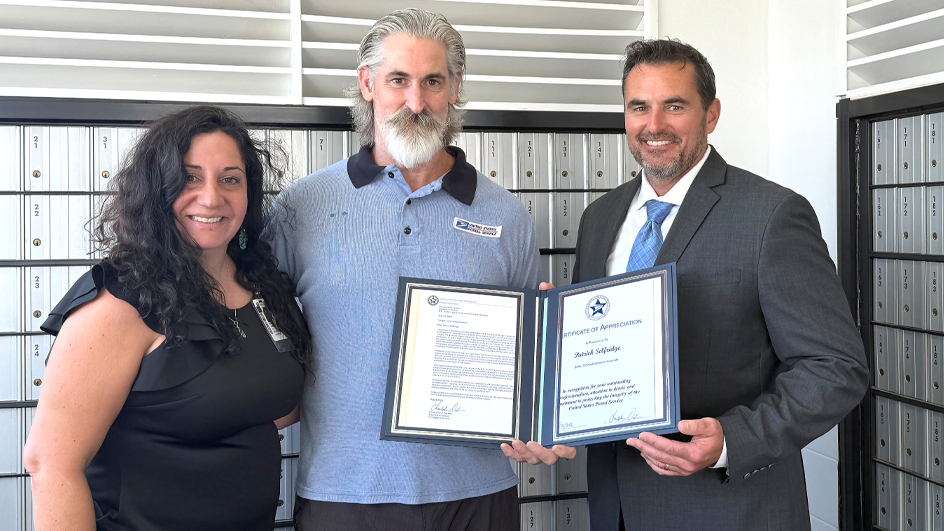
When a customer dropped off hundreds of envelopes at the Avalon, NJ, Post Office recently, Retail Associate Patrick Selfridge sensed something was off with their postage.
“The first thing that caught my eye was the date of the stamps — 2018 — and their being so pristine,” he said.
“The second head-scratcher was the volume of stamps: 200-plus. What are the odds?” He took a closer look. “I noticed there was a glossy finish and they actually felt smooth, plastic-like. Never felt any stamps like that before.”
Postmaster Melissa Lomax notified Postal Inspector Gregory Kliemisch, whose investigation confirmed Selfridge’s suspicions: The stamps were fake.
Last year, the Postal Inspection Service launched a public awareness campaign urging customers to purchase stamps directly from USPS or from retailers with legitimate resale agreements with the Postal Service.
In the Avalon case, it turns out the customer was unwittingly using counterfeit postage. Their organization had been purchasing fraudulent stamps from social media marketplaces for several years.
The Inspection Service’s website has more information on counterfeit postage. Incidents can be reported through the organization’s Counterfeit Postage Reporting System.
Email us your feedback. Your comments could be included in our “Mail” column.