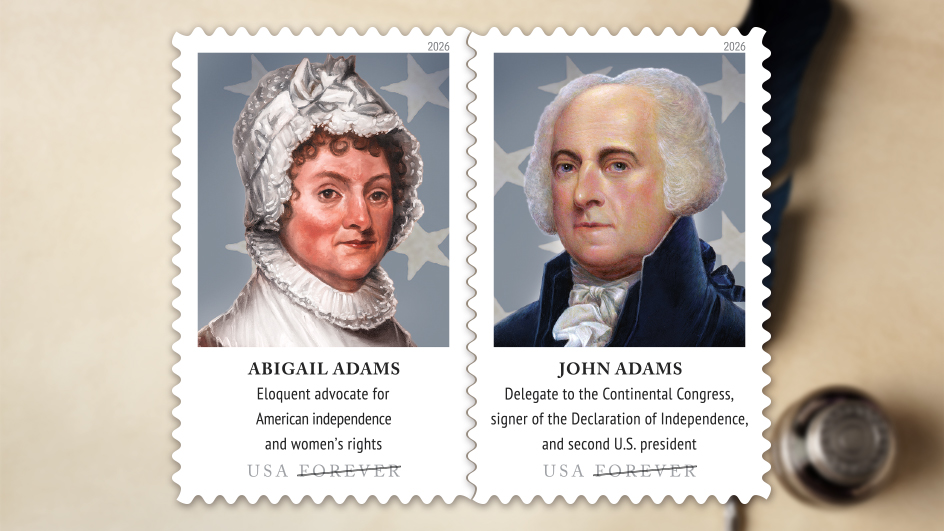
The letters between John Adams, the nation’s second president, and his wife, Abigail, provide a rare window into Colonial America and chronicle “a great, real love story,” according to historian David McCullough.
“They were both superb writers. There is not a dull letter in the whole lot,” McCullough, author of the biography “John Adams,” said during an interview for the “Big Think” videocast.
Correspondence between spouses was not routinely saved at the time.
Martha Washington, the wife of George Washington, the nation’s first president, is believed to have followed George’s wishes and burned their letters upon his death, though a few are known to have escaped the flames.
Thomas Jefferson, the nation’s third president, burned all correspondence between him and wife Martha in an act of grief upon her demise.
There are roughly 1,100 extant letters between the Adamses, dating from the start of their courtship in 1762 to 1801, when John left office.
They were an emotional lifeline as John’s work took him far from home — whether for legal work, as an envoy to Europe or as president of the United States — while Abigail ran the household and raised their children in Braintree, MA.
The two often address each other as “Friend” — John called Abigail “Miss Adorable” in one playful note — and the topics range from household matters to the founding of the nation. She was widely read, and he respected her opinion to such an extent that detractors called her his “cabinet of one.”
She looked back at their partnership over the years in one passage:
“I have seen near a score of years roll over our heads with an affection heightened and improved by time, nor have the dreary years of absence in the smallest degree effaced from my mind the image of the dear untitled man to whom I gave my heart.”
One recurring topic of discussion between the two was criticism of the nascent mail service. In a 1776 letter, John remarked, “We are most unfaithfully served in the Post Office,” and a letter from Abigail the following year also bemoaned the state of delivery but expressed hopefulness about the tenure of future postmaster general, Ebenezer Hazard, as surveyor of post roads.
Perhaps the most famous line from their correspondence is Abigail’s admonition to John to “remember the ladies” when writing the new nation’s laws — a passage whose intent has been explored and debated over the years.
USPS partnered with HBO, home of the miniseries “John Adams,” in a 2008 campaign to highlight the show’s focus on the Adams family correspondence.
Thankfully, the Adamses did not burn their letters.
If the Adamses “had done nothing else in their lives but write those letters, in that day and that time, and the letters survived as they had, they would have made an immense contribution to the country,” McCullough said.
The “History” column appears occasionally in Link.