With harsh winter storms affecting large swaths of the country, the Postal Service wants employees to keep safety in mind when on the road.
Wet and icy road surfaces, fewer hours of daylight, and poor visibility from snow, rain and fog can create driving hazards. To stay safe, here are some tips:
• Maintain your vehicle and tires; replace tires with worn tread.
• Make sure your lights function properly.
• Check antifreeze and windshield wiper fluid levels and replace worn wipers.
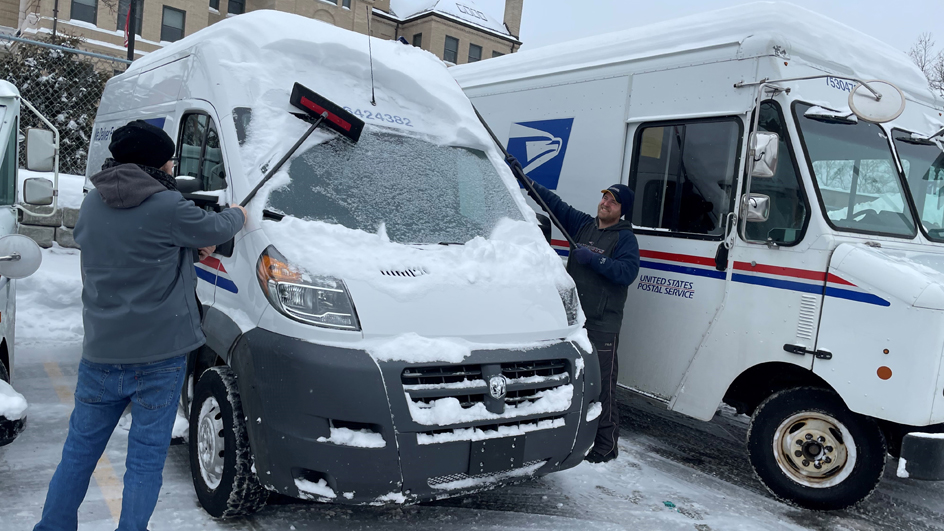
• Clear ice and snow from windows, headlights and the hood and roof of your car before starting out.
• Keep an emergency kit in your car with the following supplies: sand or cat litter, an ice scraper or snow brush, a small shovel, extra clothes, blankets and nonperishable food.
If you must travel in bad weather, monitor road and weather conditions. Here are some additional tips for the drive:
• Leave a few minutes earlier than usual to allow plenty of time to reach your destination.
• Wear your seat belt.
• Avoid distractions while driving.
• Stay alert and calm; keep an eye on traffic farther ahead so you have extra time to react to sudden changes in traffic flow.
• Maintain a safe speed for road conditions and keep a safe distance between you and other vehicles.
• Don’t use cruise control as it can cause the vehicle to slide, hydroplane or spin.
• Avoid making abrupt lane changes and use turn signals well before you turn.
• Make room for maintenance vehicles and snowplows.
• Watch for black ice on overpasses and bridges.
If you get stuck in the snow or skid off the road, stay in your car and wait for help — as long as your car is safely out of harm’s way. Turn on the car heater to stay warm but make sure your exhaust pipe is clear of snow; a blocked pipe will cause carbon monoxide to build up inside the vehicle.
The Safety page on the MyHR website has more information and resources.
Email us your feedback. Your comments could be included in our “Mail” column.